2026
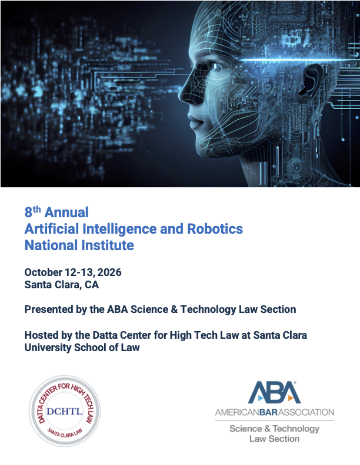
The Datta Center for High Tech Law Hosts the 8th Annual ABA AI & Robotic Conference
The Datta Center for High Tech Law at Santa Clara University School of Law was pleased to once again host the American Bar Association’s (ABA) 8th Annual AI & Robotics National Institute, bringing together legal professionals, academics, and technology experts to explore the rapidly evolving intersection of artificial intelligence, robotics, and the law.
Day One: Exploring AI, Legal Practice, and Intellectual Property
Welcome remarks from Joanna M. Justus, Managing Director of the Datta Center for High Tech Law, opened the program and set the stage for conversations about the future of AI and the legal profession. The first day featured discussions on AI governance, professional responsibility, liability, emerging regulations, and the risks associated with increasingly autonomous AI systems.
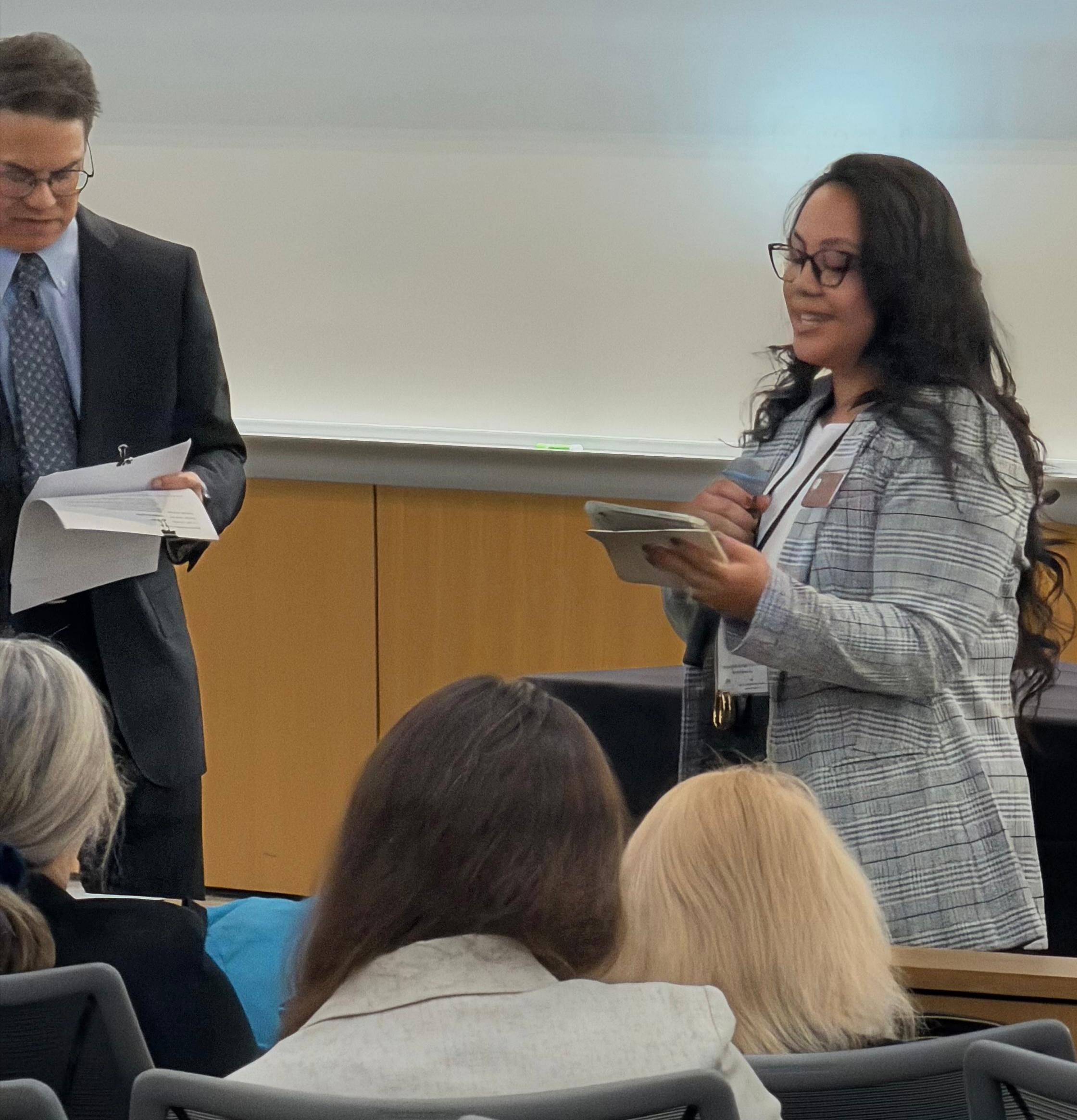
Attendees could choose between two specialized breakout tracks: AI in Practice and Intellectual Property. The AI in Practice track explored topics including AI in mergers and acquisitions, the use of AI in courtrooms and judicial chambers, and responses to AI-related crises.
The Intellectual Property track examined three timely topics:
-
AI and IP litigation risks: Copyright and other intellectual property disputes arising from AI development and use.
-
Deepfakes and entertainment law: Legal challenges involving AI-generated media, creative works, and rights holders.
-
AI automation in IP practice: How emerging tools are changing patent, copyright, and trademark applications and enforcement.
Together, these sessions explored how AI is changing both substantive intellectual property law and the everyday work of legal practitioners, raising important questions about ownership, infringement, enforcement, and the responsible use of automation.
Day Two: Bridging Law, Engineering, and AI Governance
The second day continued the conversation with a keynote featuring Linsey Krolik, Santa Clara University School of Law Adjunct Lecturer for the AI Governance course, and Kendra Sharp, Dean of Santa Clara University’s School of Engineering.
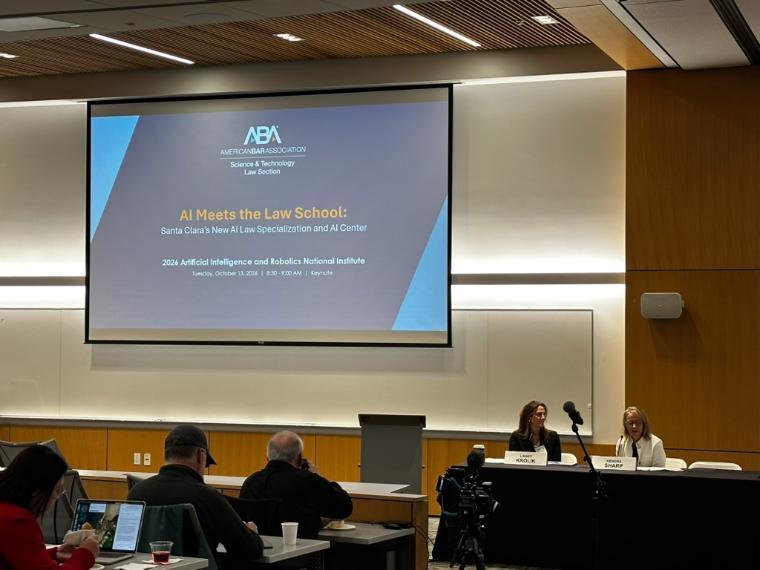
Their participation highlighted the importance of bringing legal and engineering perspectives together to understand emerging technologies. As AI becomes more integrated into professional and everyday life, collaboration across disciplines can help inform questions of governance, accountability, and responsible deployment.
This cross-disciplinary approach is particularly valuable as attorneys work to understand not only the legal implications of AI, but also the capabilities and limitations of the technologies themselves.
Preparing the Next Generation of Lawyers
The conversations underscored the importance of preparing future attorneys for a profession increasingly shaped by technological change. While AI offers opportunities to improve legal research, automate routine tasks, and expand client services, it also raises questions involving accuracy, professional responsibility, intellectual property rights, and liability.
Programs like the ABA AI & Robotics National Institute help inform how legal education can evolve alongside these developments. By engaging with practitioners and experts at the forefront of technological innovation, the Datta Center for High Tech Law continues to explore ways to equip students with the knowledge and judgment needed to navigate emerging legal challenges.
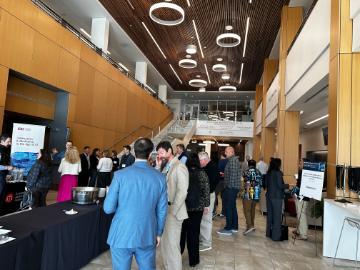
The Datta Center for High Tech Law extends its gratitude to the American Bar Association's Science and Technology Section, the speakers, and all participants who contributed to this year's conference. Their expertise and engagement made the conference a valuable opportunity to examine the future of AI, robotics, and legal practice.
As these technologies continue to evolve, we look forward to building on these conversations and helping prepare the next generation of lawyers for the opportunities and challenges ahead.